Watch Buying Guide for Beginners: A Complete Starter Guide
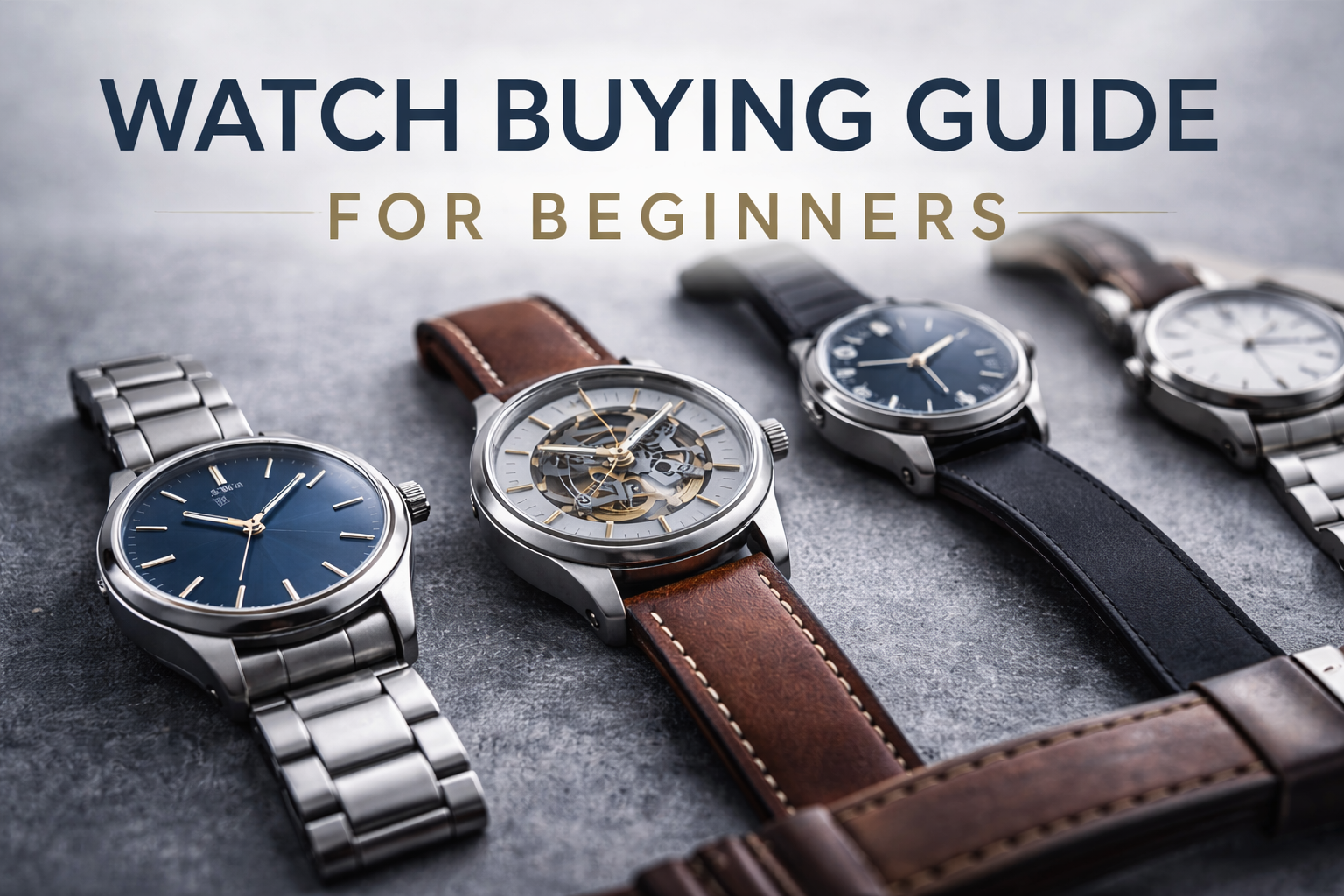
Watch Buying Guide for Beginners
Quick Answer
If you are buying your first watch, start with a simple, comfortable, and versatile model that fits your wrist and daily routine. Most beginners do best with either a quartz watch for easy maintenance and accuracy or an automatic watch for mechanical appeal and traditional craftsmanship. Focus on movement, size, comfort, readability, water resistance, and budget before worrying too much about brand names or complicated features.
Introduction
Buying your first watch should feel exciting, not confusing.
But for most beginners, the first experience is the opposite. You start looking at watches online, and suddenly there are endless choices: quartz, automatic, manual, dress watches, sports watches, stainless steel, leather straps, different sizes, different dial styles, and different price ranges. After a while, it becomes hard to tell what actually matters and what is just marketing.
The good news is that choosing your first watch does not have to be complicated.
Most beginners do not need to understand every detail right away. What matters is learning a few basic things well: how the watch works, how it fits, how it feels in daily life, and whether it matches your routine. Once you understand those points, it becomes much easier to choose with confidence.
If wrist fit is one of the things you are unsure about, it also helps to read How to Choose the Right Watch Size for Your Wrist before making a final decision.
Buying your first watch can feel overwhelming. With so many styles, movements, and materials available, it’s easy to feel confused. This guide will help beginners understand the basics and choose the right watch with confidence.
1. Understand Watch Movements
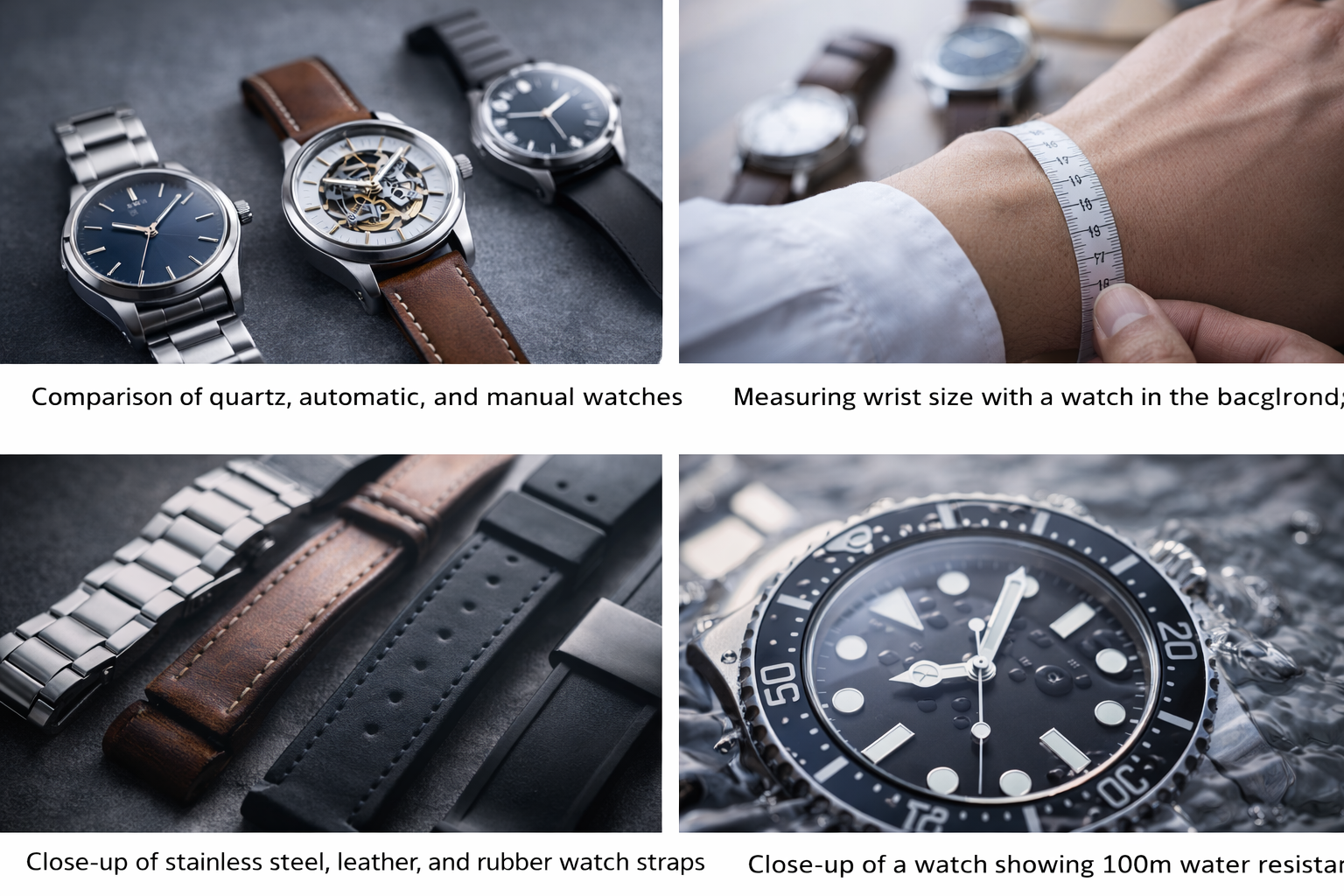
The movement is the heart of a watch. There are three main types:
Quartz Watches
Quartz watches are powered by batteries and are very accurate. They require minimal maintenance and are ideal for daily wear.
Automatic Watches
Automatic watches work through wrist movement and do not need batteries. They are popular among watch enthusiasts because of their craftsmanship and mechanical beauty.
If you are interested in exploring different automatic watch styles, you can browse our automatic watch collections to better understand how these watches look and feel in real-world designs.
Manual Watches
Manual watches must be wound by hand. They offer a traditional experience but require more attention.
For beginners, quartz or automatic watches are usually the best choice.
Still not sure which movement fits your lifestyle best?
Read our latest comparison — Automatic vs Quartz Watch Maintenance — to understand how each type differs in care and long-term performance.
2. Choose the Right Watch Size
Watch size greatly affects comfort and appearance.
-
Case diameter: usually between 36mm–42mm
-
Wrist size matters more than trends
-
A watch should sit comfortably without sliding
A properly sized watch looks balanced and feels natural on your wrist.
This is why How to Choose the Right Watch Size for Your Wrist is such an important follow-up read for beginners.
3. Case Material Matters
Common watch materials include:
-
Stainless Steel – durable and versatile
-
Leather Strap – classic and comfortable
-
Metal Bracelet – sporty and long-lasting
-
Rubber Strap – great for sports and water activities
Choose materials based on your lifestyle and daily use.
To see how case materials and bracelet styles affect overall design, you can explore a variety of luxury-style watch collections for comparison.
If you want a deeper breakdown, read Best Watch Strap Material for Everyday Wear: Leather, Rubber, or Metal?.
You may also find Stainless Steel vs Titanium Watches: Which Material Is Better for Daily Wear? useful if you are comparing comfort and long-term wear.
4. Dial Design and Readability
A clean dial improves readability and elegance.
-
Simple markers are easier to read
-
Luminous hands help in low light
-
Date windows are useful but optional
Beginners should focus on clarity over complexity.
5. Water Resistance Basics
Water resistance is often misunderstood.
-
30m – splash resistant
-
50m – light rain and hand washing
-
100m+ – swimming and water activities
Always check water resistance before exposing your watch to water.
Real-life example
Someone buys a stylish watch for daily wear and assumes it will be fine in the shower or during more active water use, only to later learn that its water resistance is too limited. That is why checking this before buying matters.
Always look at water resistance as a practical feature, not just a number.
If this topic matters to you, you may also want to read Water Resistance in Watches Explained: What You Really Need for Daily Life.
6. Set a Realistic Budget
You don’t need to overspend to get a good watch. Decide your budget first and focus on quality, comfort, and reliability rather than branding.
In fact, beginners often make better decisions when they decide their budget first and then look for the best balance of quality, comfort, and versatility within that range. This helps prevent buying based only on branding, hype, or design that looks good in pictures but does not fit your actual needs.
Real-life example
A beginner with a realistic budget chooses one well-balanced watch that works for work, weekends, and daily wear. Another beginner tries to stretch too far for a watch that looks exciting at first but ends up being less comfortable or less practical in real life.
A good first watch does not have to be expensive. It just has to make sense for your lifestyle.
This is also why it helps to think about one good versatile watch first, rather than trying to do too much at once. If that question is relevant to you, read One Watch or Several? Which Choice Makes More Sense for Everyday Life.
What Most Beginners Should Prioritize First
If you are still unsure where to focus, this order usually works best:
- Movement
- Size and comfort
- Material and strap
- Dial readability
- Water resistance
- Budget
- Style details
A beginner watch does not need to do everything. It just needs to do the important things well.
Final Thoughts
A watch is more than just a timekeeping tool—it’s a reflection of your style and personality. By understanding the basics of movements, size, materials, and functionality, beginners can confidently choose a watch that fits their needs.
Take your time, do your research, and enjoy the journey of discovering the perfect watch.
FAQ
1. What type of watch is best for beginners?
For most beginners, quartz and automatic watches are the best starting choices. Quartz is easier and lower-maintenance, while automatic offers more mechanical appeal.
2. What watch size should a beginner choose?
Most beginners do well with something in the 36mm to 40mm range, but the best size depends on wrist size, lug-to-lug length, and comfort.
3. Is a quartz or automatic watch better for daily wear?
Quartz is often better for easy daily use because it is more accurate and lower-maintenance. Automatic is better if you enjoy traditional watchmaking and do not mind more care.
4. What strap is best for a first watch?
Stainless steel bracelets are often the most versatile for beginners, while leather straps can feel more classic and rubber straps more sporty.
5. How much should a beginner spend on a first watch?
That depends on budget, but the main goal should be value, comfort, and versatility rather than spending more for branding alone.
6. What is the biggest mistake beginners make when buying a watch?
A common mistake is buying based only on appearance instead of thinking about size, comfort, maintenance, and real-life wear.
7. Is water resistance important for a first watch?
Yes, especially if you want something practical for daily life. Even basic daily wear can involve splashes, rain, or hand washing.