
Mechanical vs Quartz Watches: A Beginner’s Guide to Choosing the Right Movement
Mechanical vs Quartz Watches: A Beginner’s Guide to Choosing the Right Movement
Quick Answer
The biggest difference between mechanical and quartz watches is how they are powered. A mechanical watch runs through springs and gears, while a quartz watch uses a battery and a quartz crystal to keep time. In general, mechanical watches are appreciated for craftsmanship and tradition, while quartz watches are known for accuracy, convenience, and low maintenance.
If you are a beginner, quartz is usually the easier choice for daily wear. If you enjoy watchmaking history, moving parts, and classic craftsmanship, a mechanical watch may feel more rewarding.
Choosing a watch can feel overwhelming, especially when you first encounter the terms mechanical and quartz. While both types tell time, they work very differently and suit different lifestyles. Understanding these differences can help you make a more confident and informed decision.
This guide breaks down mechanical and quartz watches in a simple, beginner-friendly way.
What Is a Mechanical Watch?
A mechanical watch is powered by a complex system of springs and gears rather than a battery. These watches are often appreciated for their craftsmanship and traditional watchmaking techniques.
Key characteristics of mechanical watches:
-
Powered by a mainspring
-
Often hand-wound or automatic
-
No battery required
-
Smooth sweeping second hand
-
Valued for craftsmanship and heritage
Mechanical watches appeal to enthusiasts who enjoy the artistry behind watchmaking and don’t mind occasional maintenance.
What Is a Quartz Watch?
A quartz watch is powered by a battery and uses a quartz crystal to keep time. This technology is known for its accuracy and convenience.
Key characteristics of quartz watches:
-
Battery-powered
-
Extremely accurate timekeeping
-
Minimal maintenance
-
More affordable in most cases
-
“Ticking” second hand movement
Quartz watches are ideal for everyday wear and for people who prefer simplicity and reliability.
Mechanical vs Quartz: Which One Should You Choose?
Still wondering which type of watch needs more care and servicing?
Read our latest comparison — Automatic vs Quartz Watch Maintenance — to understand the key differences in upkeep.
There’s no universal “better” option—it depends on your needs.
-
Choose mechanical if you value tradition, design, and mechanical engineering
-
Choose quartz if you want accuracy, low maintenance, and ease of use
Many watch collectors appreciate both styles for different occasions.
If you’d like to see how these movements are used across different designs, you can explore our watch collection to better understand how mechanical and quartz movements appear in real-world styles.
Final Thoughts
Understanding the difference between mechanical and quartz watches makes choosing your first—or next—watch much easier. Whether you prioritize craftsmanship or convenience, the right watch is the one that fits your lifestyle and personal taste.
As you learn more about watch movements, you’ll start to appreciate why different watches exist for different people—and why there’s no single perfect choice.
This image illustrates the difference between mechanical and quartz watch movements.
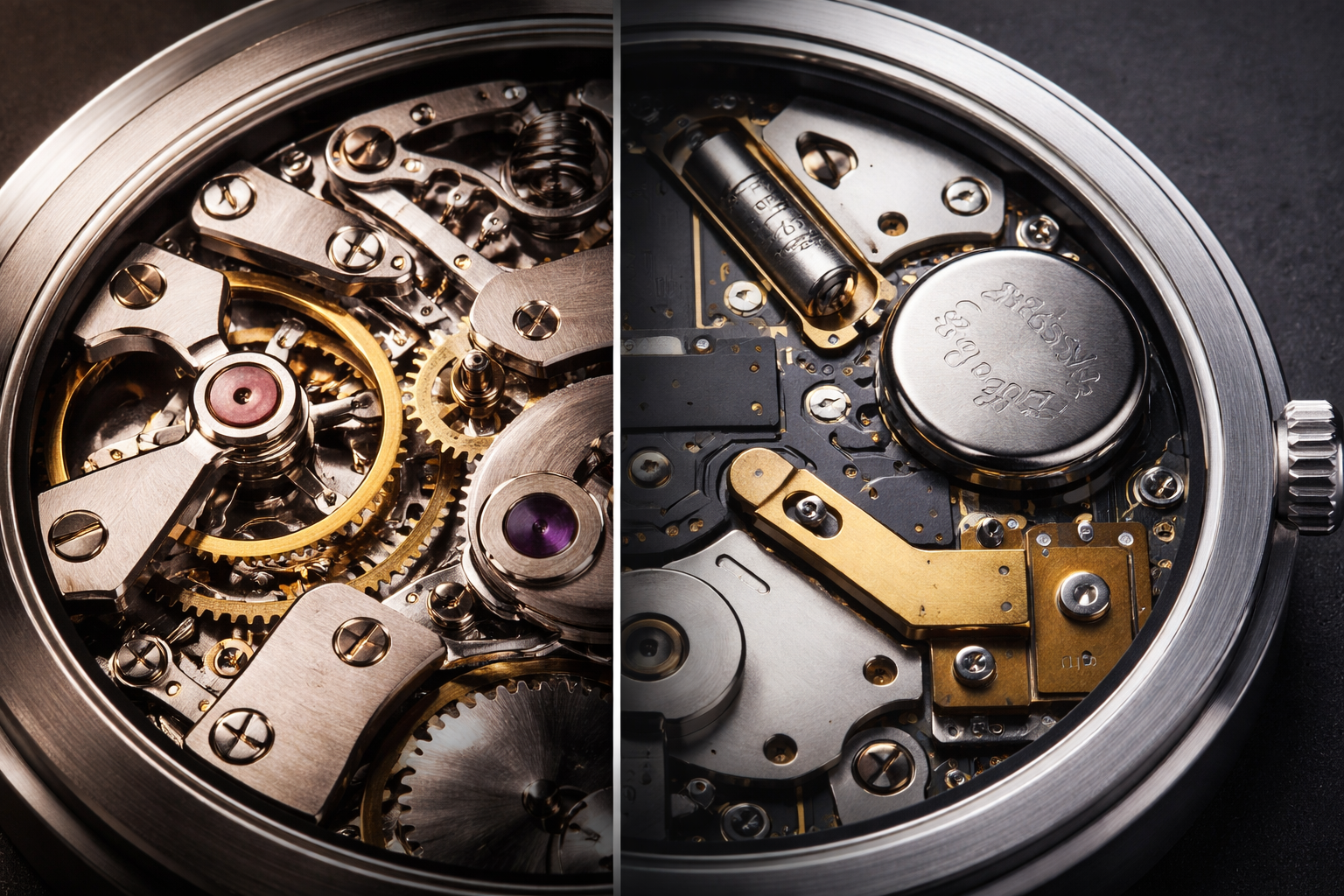
If you’re choosing your first watch, this complete beginner guide will help you make the right decision.
FAQ
1. What is the main difference between mechanical and quartz watches?
The main difference is the power source. Mechanical watches use springs and gears, while quartz watches use a battery and quartz crystal.
2. Are quartz watches better than mechanical watches?
Not necessarily. Quartz watches are usually better for accuracy and convenience, while mechanical watches are often preferred for craftsmanship and traditional appeal.
3. Which is better for beginners, mechanical or quartz?
For most beginners, quartz is the easier choice because it is more accurate, lower maintenance, and simpler to own. Mechanical watches are better for people who enjoy the experience of traditional watchmaking.
4. Do mechanical watches need more maintenance than quartz watches?
Yes. Mechanical watches usually need more regular servicing and more attention over time, while quartz watches are generally easier to maintain.
5. Why are mechanical watches more expensive?
Mechanical watches are often more expensive because of their more complex construction, craftsmanship, and the time required to assemble and regulate the movement.
6. Are quartz watches less valuable?
Not always. Quartz watches are often more affordable, but they can still be high quality and very practical. Value depends on what you want from a watch—precision and convenience or craftsmanship and tradition.
7. Which type of watch is more accurate?
Quartz watches are generally much more accurate than mechanical watches. That is one of the main reasons many people choose quartz for everyday wear.
8. Can I wear a mechanical watch every day?
Yes, many people wear mechanical watches every day. You just need to be more aware of servicing, power reserve, and general care compared with quartz.
