
Do Brushed and Polished Finishes Change How Expensive a Watch Looks?
Do Brushed and Polished Finishes Change How Expensive a Watch Looks?
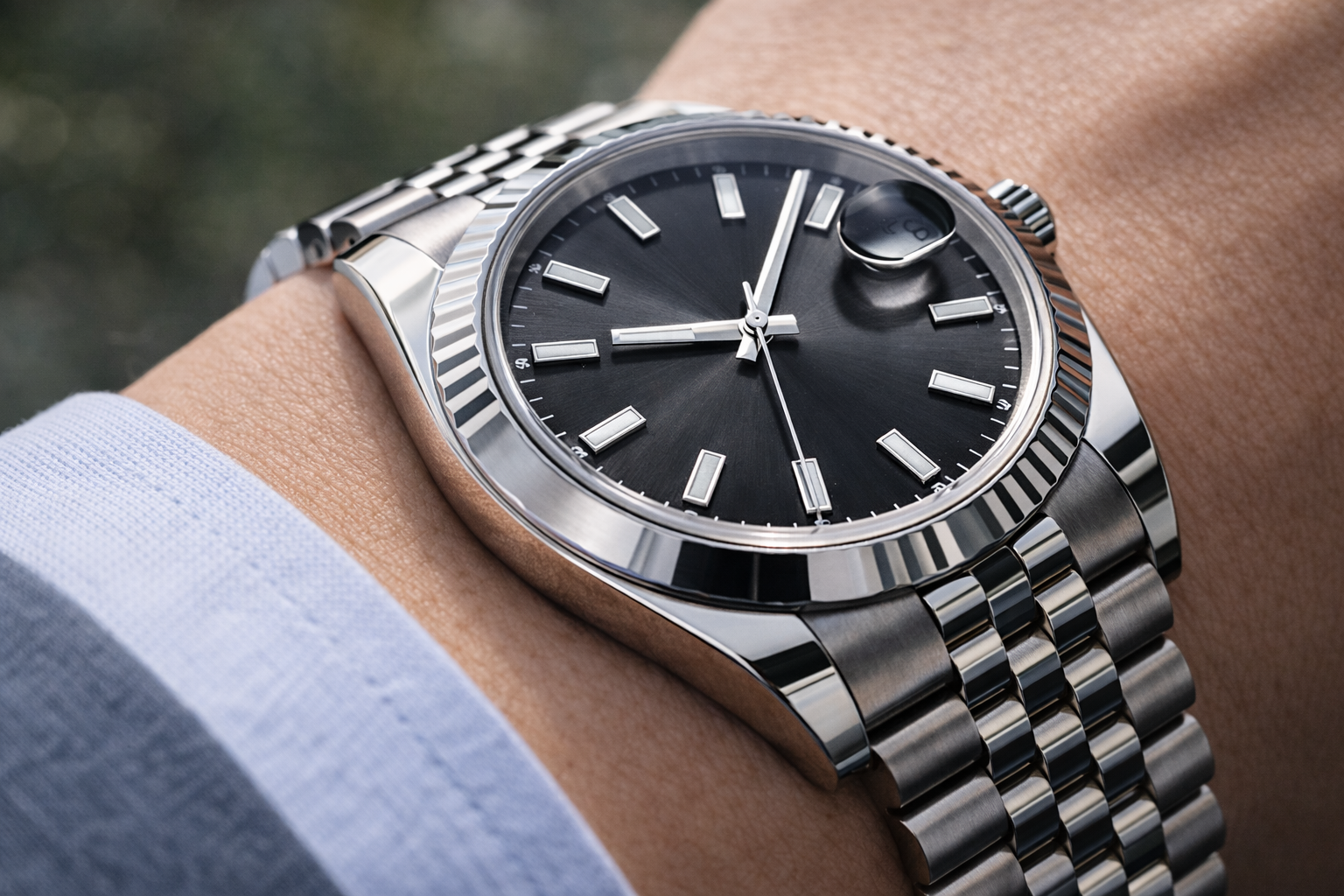
A lot of buyers notice dial color first. Some focus on case size. Others pay attention to the bracelet or brand style.
But one detail often gets underestimated until the watch is actually worn: surface finish.
This matters more than many people expect. Two watches can have a very similar shape, similar size, and even similar dial layout, yet one immediately feels more premium on the wrist. Very often, the difference is not the design itself. It is the way the surfaces handle light.
That is where brushed and polished finishes start to matter.
In photos, polished surfaces can look more expensive because they catch attention faster. In real life, though, the answer is not always that simple. Sometimes brushed finishing looks more refined. Sometimes polished elements add the right level of luxury. And sometimes too much of either one makes a watch feel less balanced.
If you have already read our guide on what makes a watch look expensive, you probably already know that expensive-looking design is usually about control, not just shine. And when a watch is worn in office light, daylight, restaurants, travel, or everyday commuting, that control becomes much easier to notice.
Quick Answer
Yes, brushed and polished finishes can significantly change how expensive a watch looks. In real life, brushed finishing often feels more refined and controlled, while polished finishing adds visual luxury and attention. The most premium watches usually use both in a balanced way, so the watch catches light cleanly without looking too flat or too flashy.
Why Finish Matters More in Real Life Than in Product Photos
A product photo can make almost any polished surface look attractive. Controlled lighting, soft reflections, and perfect angles usually help.
But daily life is different.
A watch gets seen:
- under office lights
- by a window in daylight
- when reaching for coffee
- during a handshake
- with a shirt cuff moving over the case
- outdoors while walking or commuting
In these settings, finish changes everything. It affects:
- how sharp the watch looks
- how bright or quiet the design feels
- whether the watch appears premium or overdone
- how well the case shape reads from a distance
- whether the bracelet feels elegant or too flashy
That is why finish is not only a technical detail. It directly changes the impression of the watch in normal wear.
1. Brushed Finishing Usually Feels More Controlled
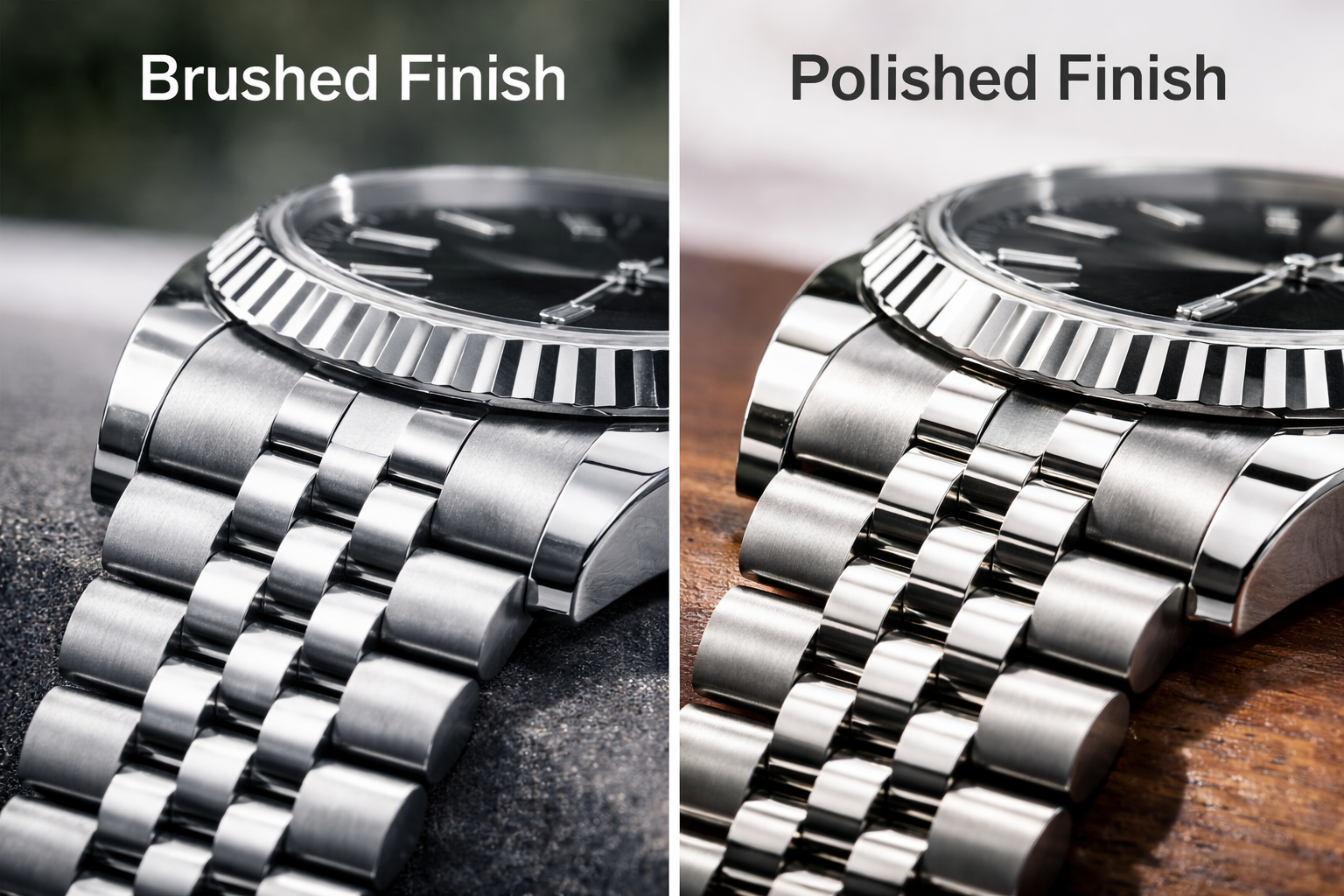
Brushed surfaces often look more premium than buyers expect because they tend to feel calmer and more intentional.
A well-brushed surface usually gives the impression of:
- cleaner lines
- more stable light reflection
- less visual noise
- stronger everyday refinement
- a more modern or understated luxury feel
This is especially noticeable on sports watches, integrated-bracelet designs, and daily wear pieces. In office settings or daylight, a brushed case often feels more mature because it reflects light in a softer way.
Instead of shouting for attention, it holds shape more clearly.
That is one reason many buyers only begin to appreciate brushed finishing after wearing a watch regularly. At first, it can seem less exciting than polished metal. Later, it often feels more convincing.
2. Polished Finishing Creates Faster Luxury Impact
Polished surfaces usually create a more immediate impression.
They catch light quickly. They attract the eye faster. They often make a watch feel dressier or more luxurious at first glance.
This is why polished details are so effective on:
- dressier watches
- bezel edges
- center bracelet links
- case flanks
- markers and hands
- watches meant to feel more elevated in formal settings
In restaurant lighting, evening wear, or close conversation, polished finishing can make a watch feel more expensive because it adds energy and visual contrast.
But there is a limit.
When polished finishing is overused, the watch can start to feel too reflective, too bright, or slightly cheap in a way many beginners do not expect. Instead of looking premium, it can start looking like it is trying too hard.
That is why polished surfaces work best when they are placed with intention.
3. The Most Expensive-Looking Watches Usually Use Both
This is the part many people miss.
The question is often not “brushed or polished?”
The better question is: how well are they combined?
The watches that usually look the most premium in real life tend to use both finishes together in a controlled way.
For example:
- brushed top surfaces to define shape
- polished side surfaces to add depth
- brushed bracelet links for calm structure
- polished accents to keep the watch from feeling dull
- polished hands and markers against a quieter case finish
This combination helps a watch feel both refined and alive.
Too much brushing can make a watch feel flat.
Too much polishing can make it feel noisy.
The balance between the two is often what creates a high-end impression.
That is also why premium finishing is not just about the material itself. It is about how the watch handles contrast.
4. Brushed Finishing Often Looks Better for Daily Wear
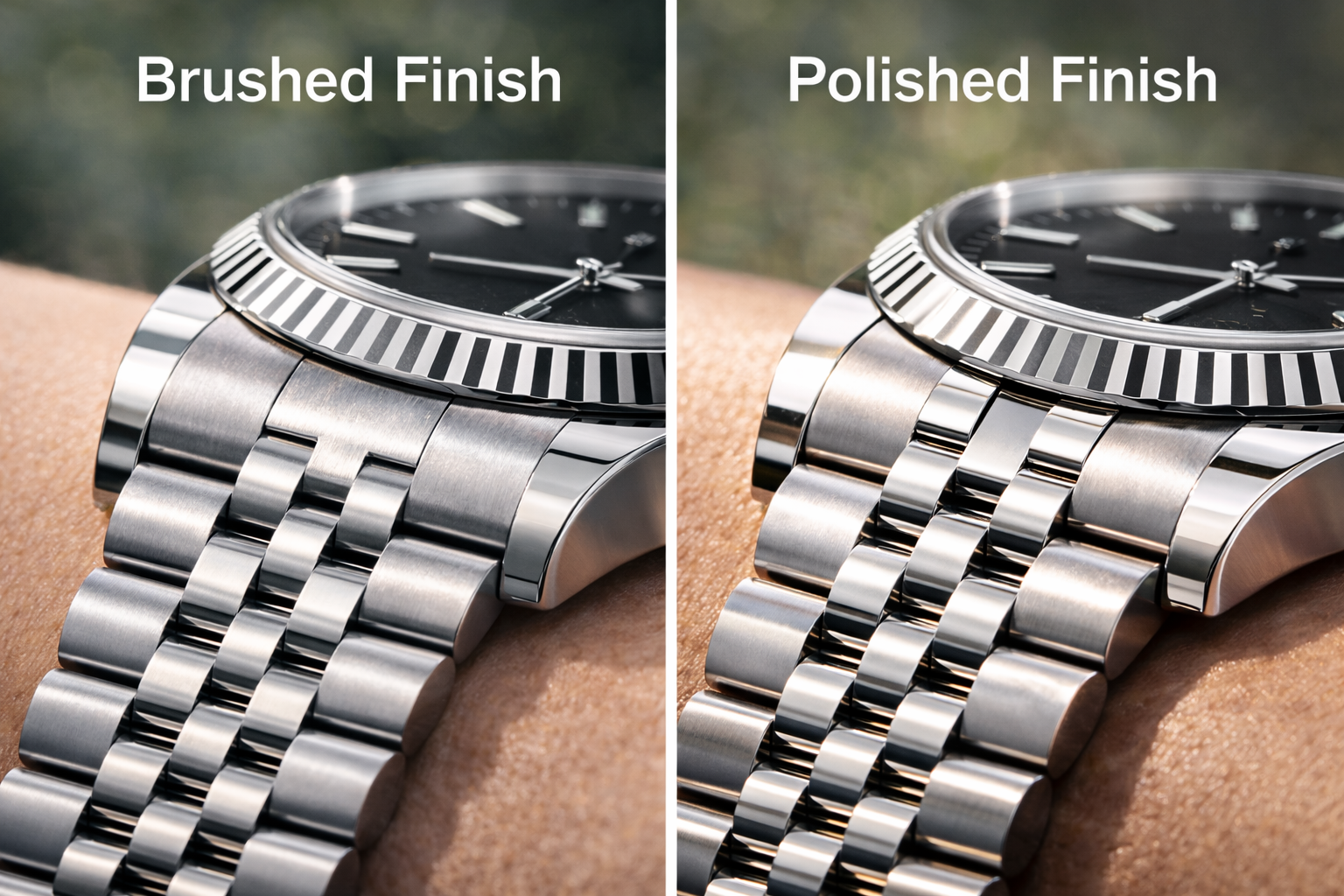
For everyday use, brushed finishing usually has an advantage.
That is because daily wear is not judged in perfect lighting. It is judged while moving, under mixed conditions, with real clothes, and often from normal social distance.
In those settings, brushed finishing often feels easier because it:
- hides minor marks better
- feels less flashy in office environments
- works more naturally with casual and smart-casual clothes
- gives the watch a more relaxed confidence
- keeps the case shape readable in daylight
This is one reason many versatile daily watches lean heavily on brushed surfaces. If you have already thought about how to choose the right watch for everyday wear, you will know that the best daily watch is often the one that feels right without needing too much attention.
Brushed finishing usually supports that kind of wear very well.
5. Polished Details Matter More in Formal and Dressier Settings
On the other hand, polished finishing often becomes more important in dressier situations.
A watch worn with:
- a blazer
- a shirt cuff
- evening clothes
- formal shoes
- restaurant or event lighting
often benefits from polished accents because they create more elegance and presence.
This does not mean the whole watch should be mirror-bright. Usually, it means that the polished elements help the watch feel cleaner and more deliberate when seen at closer social distance.
This is very similar to the logic behind how to choose the right watch for formal occasions. In more formal settings, subtle shine often helps a watch feel more complete.
A fully brushed watch can still work, but polished touches usually make a dressier watch feel more finished.
6. Finish Changes How Big or Small a Watch Looks
This is one of the more underrated effects.
Surface finish can change how large a watch seems on the wrist.
Brushed finishing often makes a watch feel:
- more compact
- more controlled
- more tool-like
- more understated
Polished finishing often makes a watch feel:
- more noticeable
- more open
- more reflective
- slightly larger or more attention-grabbing
That is why finish should always be considered together with size and proportion. A watch that already wears large can feel even more dominant if it uses too many polished surfaces. A watch with well-placed brushing may feel better balanced.
This also connects closely with a solid watch size guide: case diameter, lug-to-lug, and thickness. Measurements matter, but finish changes visual size more than many people realize.
7. Light Reflection Often Decides Whether the Watch Feels Premium
Many buyers describe a watch as looking “premium” without being able to explain why.
Very often, what they are reacting to is light behavior.
A premium watch usually reflects light in a controlled way. The reflections help define the shape instead of breaking it.
That means:
- brushed areas look even instead of dull
- polished areas look crisp instead of harsh
- transitions between the two feel sharp
- the watch keeps its character in different lighting
A cheaper-looking finish usually fails here. The reflections may feel too random, too flat, or too aggressive. The watch can look nice from one angle and awkward from another.
That is why finish is so important in real life. A watch does not stay still on the wrist. It keeps catching new light all day.
8. Bracelet Finish Often Matters More Than Case Finish
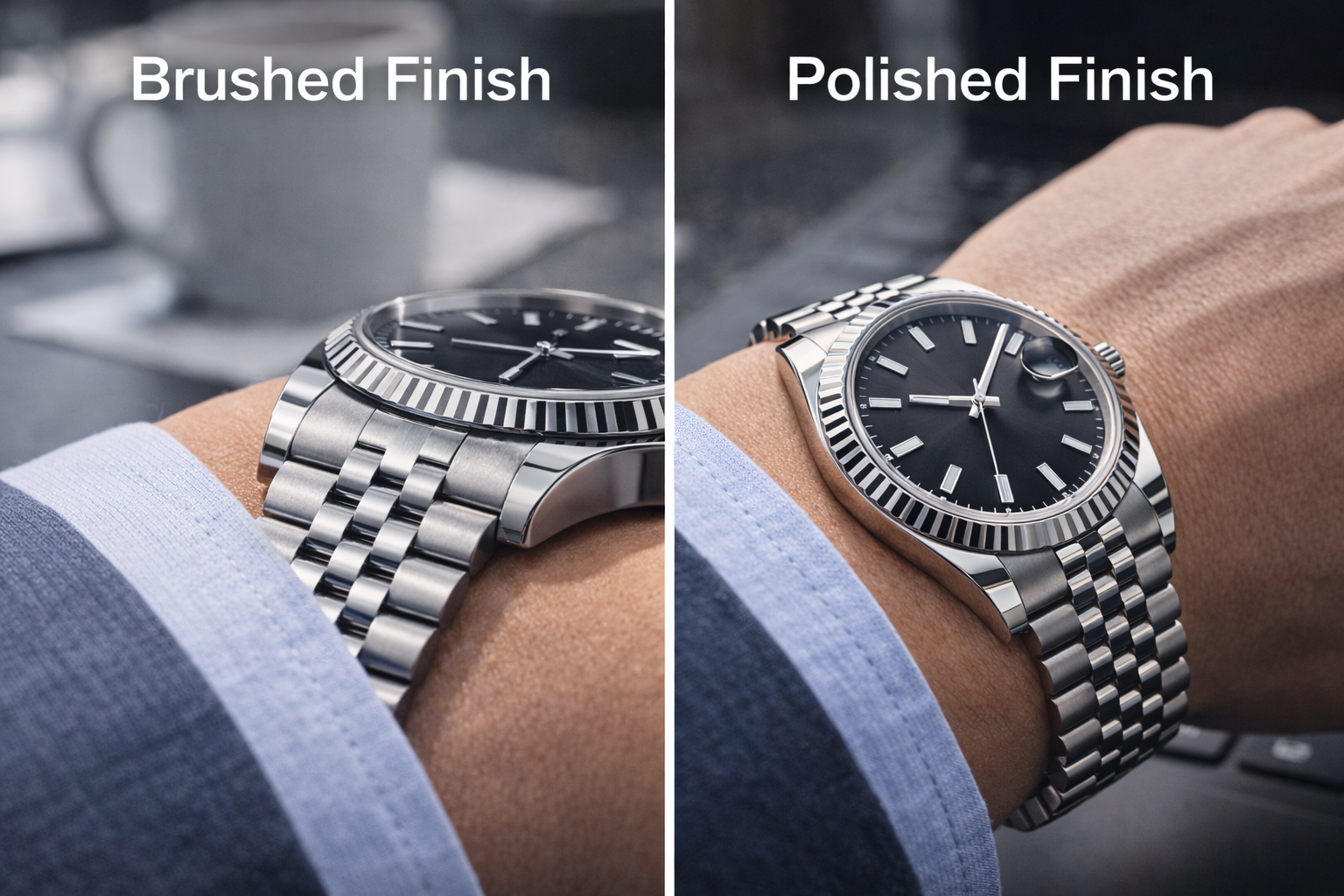
A lot of people focus on the case and bezel first, but the bracelet often changes the premium feel even more.
Why? Because the bracelet moves.
You see it more during normal wear. It bends, shifts, catches light, and sits across a larger area of the wrist. That means its finish has a huge effect on overall impression.
A bracelet with mostly brushed surfaces often feels:
- more serious
- more versatile
- more expensive in daily use
- less likely to look overdone
A bracelet with polished center links or polished accents can feel:
- dressier
- more jewelry-like
- more eye-catching
- more elevated in formal settings
Again, balance matters.
In real life, this becomes very obvious when comparing watches across commuting, desk work, dinner settings, and travel. The bracelet often decides whether the watch feels quietly premium or slightly too bright for the situation.
9. Which Finish Looks More Expensive Depends on the Watch Type
There is no universal winner because different watch styles benefit from different finishing priorities.
On sporty everyday watches
Brushed finishing usually feels more premium because it supports practicality and balance.
On dressier watches
Polished accents usually feel more expensive because they add elegance and visual lift.
On integrated-bracelet designs
The finishing pattern becomes even more important because the case and bracelet read as one object.
On vintage-inspired watches
Too much polish can feel wrong, while softer brushing and selective highlights often look better.
On watches meant to be versatile
A combination of brushing and polish usually works best.
So the answer depends partly on context. Expensive-looking design is not about one formula. It is about whether the finish suits the watch’s purpose.
What Buyers Usually Notice Late
At first, most buyers focus on:
- dial color
- bezel type
- case size
- brand style
- bracelet shape
Later, after more wear, they start noticing:
- how the case behaves in daylight
- whether polished areas feel too bright
- whether brushed surfaces keep the watch looking clean
- whether the finish suits office wear
- whether the bracelet still feels premium after hours of movement
This is why finish often becomes more important over time. It is not always the first thing people talk about, but it is often one of the reasons a watch keeps feeling right.
How to Judge Finish More Realistically
If you want to judge whether a finish looks expensive, it helps to ask practical questions:
1. Does the watch still look balanced in natural light?
Not just in showroom or studio conditions.
2. Does the shine feel controlled or excessive?
A premium finish usually feels deliberate.
3. Does the bracelet support the style of the watch?
Or does it pull the design too far toward flashy or too far toward dull?
4. Do the brushed and polished areas create shape?
Or do they make the case feel visually confused?
5. Does the watch still feel right in your real daily settings?
Office, commuting, dinner, travel, weekends.
That is usually where the honest answer shows up.
Final Thoughts
Brushed and polished finishes absolutely change how expensive a watch looks. In fact, they often change the impression more than buyers expect.
Brushed finishing usually feels calmer, more refined, and easier for daily wear. Polished finishing adds quicker luxury impact and often works better in dressier or more formal contexts. But the watches that usually look the most premium are the ones that combine both in a balanced, intentional way.
That is why expensive-looking finishing is not really about shine alone. It is about how the watch handles light, supports the design, and fits real life on the wrist.
And once you notice that, it becomes hard to ignore.
FAQ
Does brushed finishing make a watch look more expensive?
Often yes, especially in daily wear. Brushed finishing usually feels more controlled and refined.
Does polished finishing always look more luxurious?
It often creates faster luxury impact, but too much can feel overly flashy or less balanced.
Which finish is better for everyday watches?
Brushed finishing is usually easier for everyday wear because it looks calmer and handles daily use more naturally.
Which finish works better for formal occasions?
Polished accents often work better in formal settings because they add elegance and more visible light play.
Do the best watches use both brushed and polished finishing?
Yes. Many premium watches use both, with brushing for structure and polish for contrast and visual lift.
